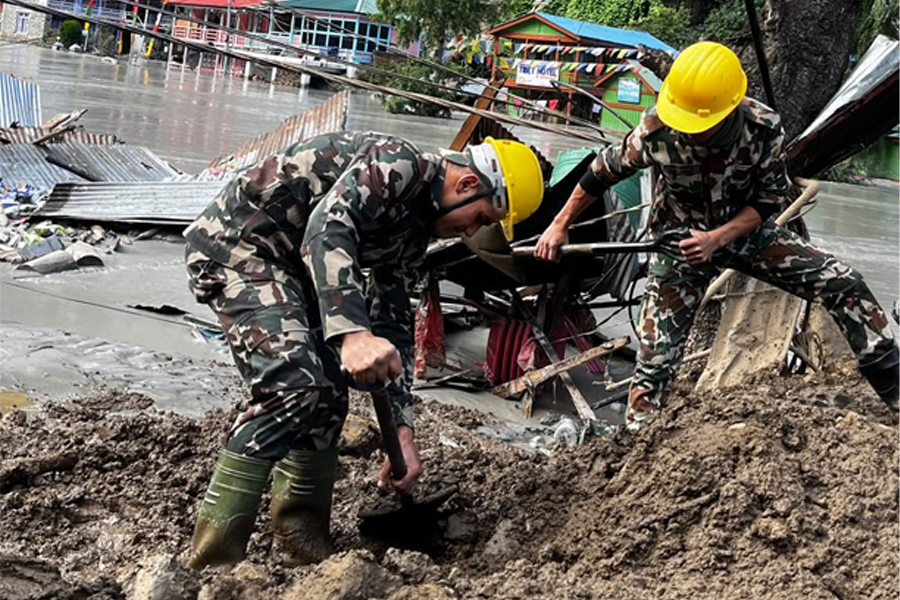
Kathmandu, October 17: The Nepali Army has described its search, rescue, relief and rehabilitation operations following the Bhotekoshi floods and other disasters as an effective example of coordination, cooperation and collective effort among security agencies and local authorities.
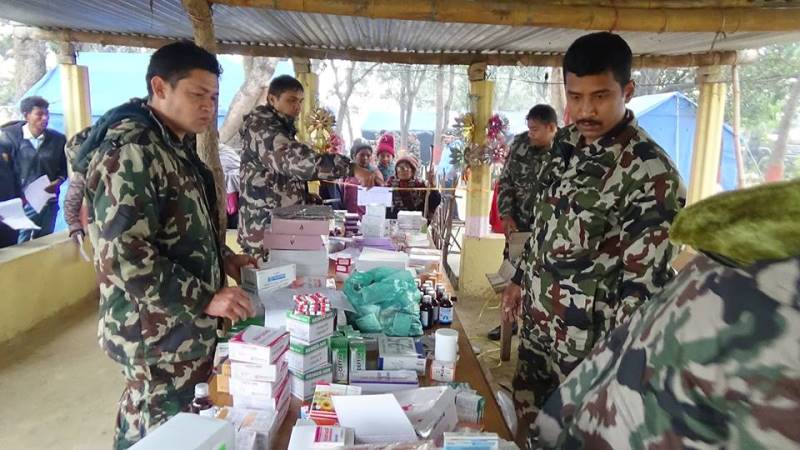
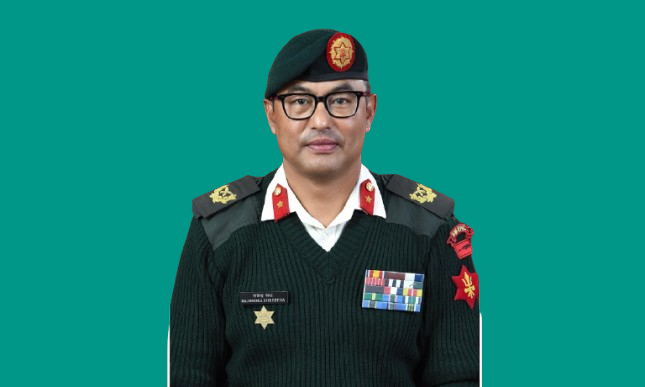
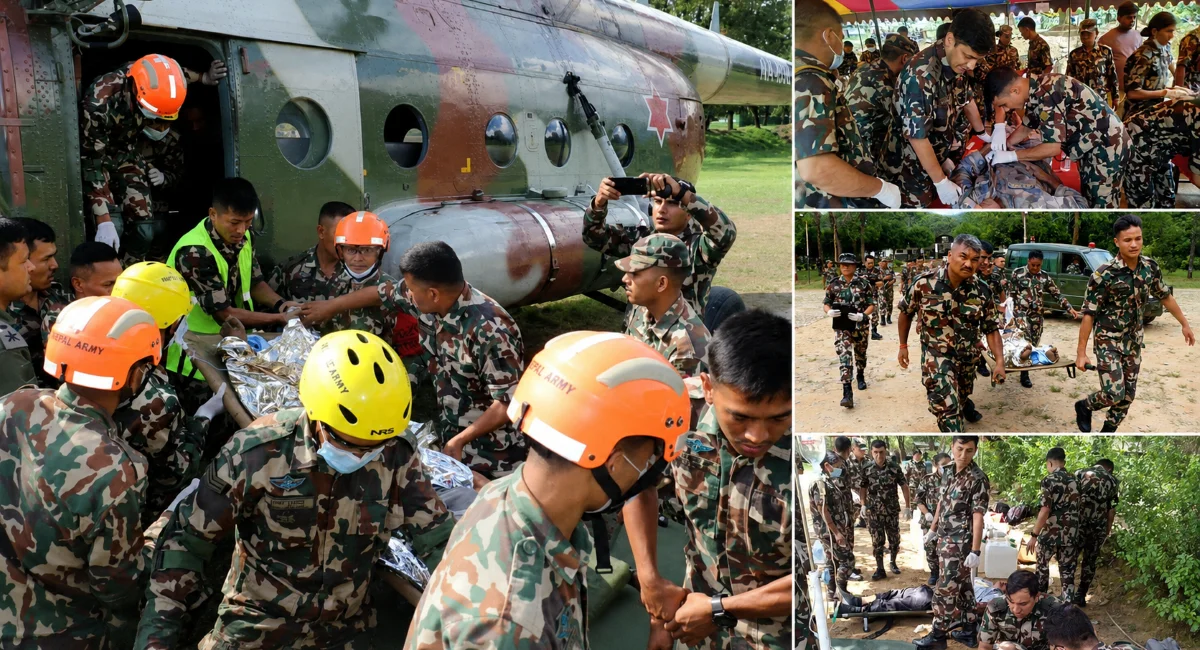
According to Army Spokesperson Brigadier General Rajaram Basnet, the Army mobilized personnel, helicopters, medical teams and engineering units to protect lives and assist people affected by floods, landslides and inundation across the country.
Despite adverse weather, difficult terrain and damaged roads and bridges, the Army continued its disaster response operations, prioritizing the rescue and safe relocation of civilians.
 During the operations, 127 people in high-risk areas were airlifted to safer locations. In a separate rescue operation following floods in the Budhigandaki River on October 11, the Army, using four helicopters, including an MI-17, and ground rescue teams, relocated 1,106 people, including foreign nationals, to safety.
The Army also transported approximately 18,680 kilograms of food and relief supplies to areas cut off by damaged road networks. It assisted residents in retrieving belongings from flooded homes and advanced preparations to install a Bailey bridge at Arughat to restore transportation.
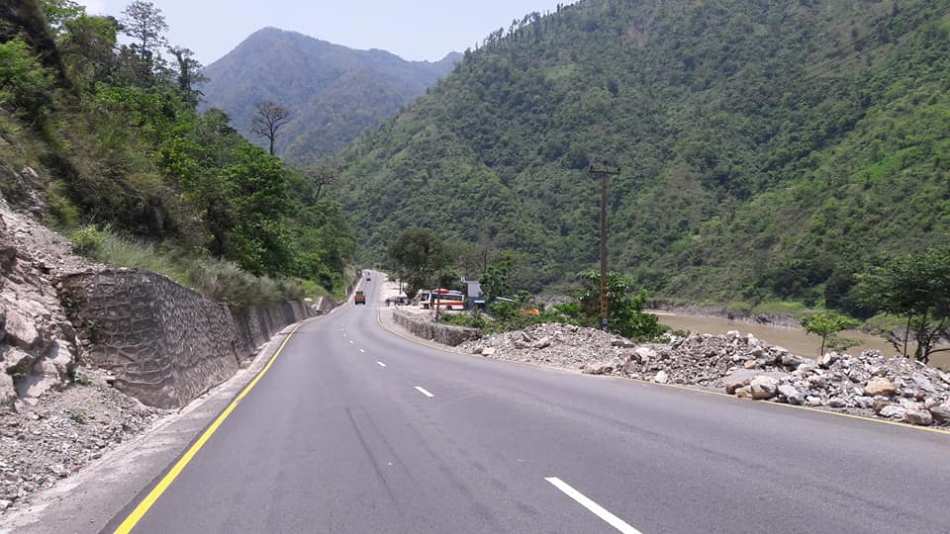
Following the Bhotekoshi floods, the Army also helped reconnect Rasuwa with the road network by installing Acrow bridges over the Tadi River at Devighat and the Phalaku River at Betrabati.
 In Manang, Army personnel worked to restore the flow of the Marsyangdi River after a landslide blocked the Thado Khola at Chame Rural Municipality-4. The Army also supported efforts to restore damaged electricity transmission lines and construct a temporary bridge to reconnect Upper Manang.
Similarly, the Army assisted in airlifting the bodies of tourists who died in an avalanche on Mount Himlung in Narphu Rural Municipality-5, Manang.
The Army also used drones to supply fuel to machinery required for rescue operations and road clearance in areas where conventional transportation was disrupted, demonstrating the use of technology in disaster response.
The Army said its operations were carried out in coordination with the Nepal Police, Armed Police Force Nepal, local administrations, local governments and communities under the direction of the Government of Nepal.
It emphasized that effective disaster management requires coordinated efforts among all relevant agencies. The combined use of air and ground resources helped rescue people and deliver essential supplies despite obstacles such as restricted airspace, blocked tunnels and completely disrupted road access.
The Nepali Army said the courage, professionalism, dedication and humanitarian commitment demonstrated by its personnel had helped strengthen public trust during emergencies. It reaffirmed its commitment to protecting lives, providing assistance and supporting communities in returning to normal life following disasters.