Kathmandu: The Nepali Army’s Welfare Fund has evolved into an institutional foundation for ensuring the social security and well-being of serving and retired army personnel and their dependent family members. Since its establishment in 2032 BS (1975/76), the fund has been implementing programmes in education, healthcare, skill development, employment and financial security.
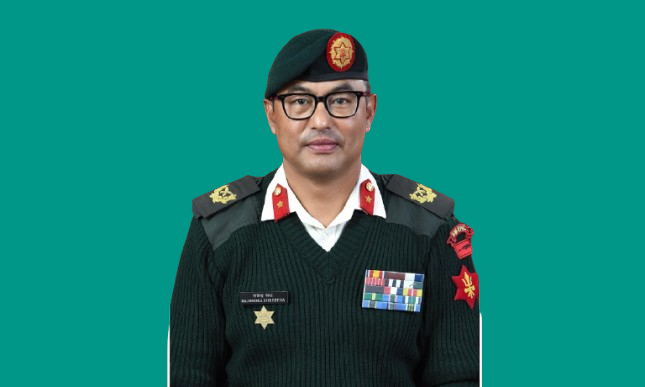
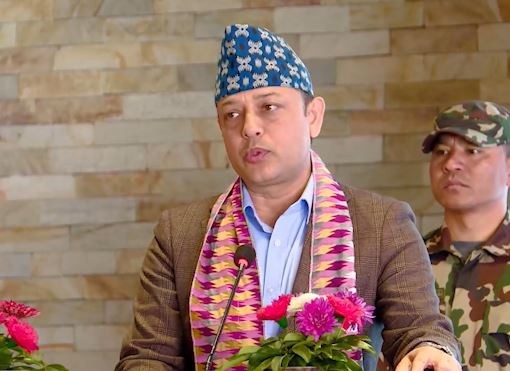
According to Brigadier General Rajaram Basnet, spokesperson for the Nepali Army, the fund’s contributions extend beyond the welfare of military families and also support the government’s efforts in education, healthcare, skill development and social security.
At present, approximately one million beneficiaries are receiving various facilities and concessions through the fund. Around 40,000 students are studying at military schools, while more than 110,000 military personnel have benefited from concessional loans.
The fund has emerged not merely as a mechanism for providing facilities to military families but also as an institutional platform for producing skilled and self-reliant citizens through education, healthcare, skills training, employment and entrepreneurship.
Contribution to Education
The fund operates military schools and colleges, medical and nursing institutions, polytechnic colleges and the Nepali Army Institute of Agricultural Sciences to provide quality and affordable education to the children of military personnel and produce skilled human resources required by the nation.
So far, these institutions have produced 1,074 doctors, 2,076 nurses, 55 technical professionals and 409 agricultural experts. Approximately 30,000 military and civilian students have graduated from military schools and colleges, while around 4,000 have completed their studies at technical colleges.
To expand access to education, the fund has arranged educational facilities for 4,600 children of military families through 244 contracted educational institutions across various districts.
Currently, around 40,000 students are enrolled in military schools. In addition, approximately 35,000 beneficiaries whose children could not access military schools, colleges or contracted institutions receive an annual lump-sum scholarship of Rs. 25,000 for one child per family.
These initiatives have helped reduce educational barriers caused by financial difficulties and expanded equal opportunities for children of military families. The fund’s educational institutions have thus become important centres for developing national human resources.
Affordable Healthcare and Support to the National Health System
Military healthcare services began with the establishment of the Tribhuvan Chandra Military Hospital in 1983 BS. The services have gradually expanded, and Birendra Army Hospital has now been established as a central and specialised military hospital.
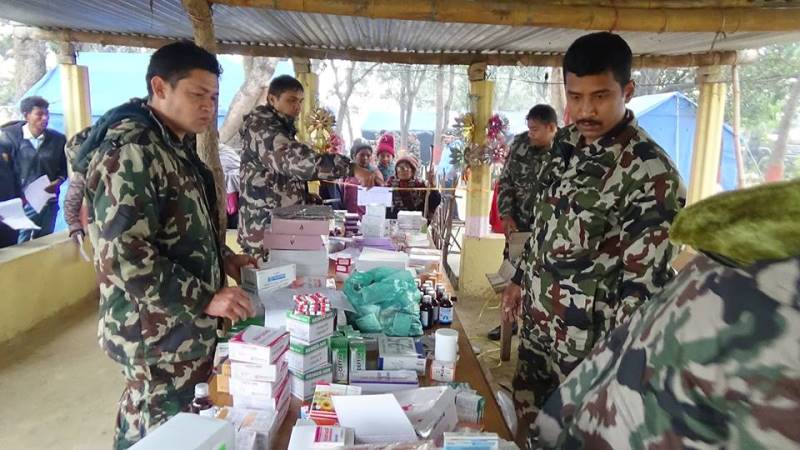
In addition, military and field hospitals operating in all seven provinces provide healthcare services to beneficiaries. The fund also reimburses treatment expenses incurred by beneficiaries at 18 designated civilian hospitals.
To improve access to healthcare, the fund has increased annual outpatient treatment limits for patients suffering from complex diseases, improved medicine management and introduced digital systems to make service delivery more efficient.
In fiscal year 2082/83, approximately 500,000 beneficiaries received treatment services. Similarly, 1,026 patients suffering from serious illnesses received treatment support of up to Rs. 160,000.
The mobilisation of doctors and nurses who completed their studies under scholarship programmes, along with digital record-keeping through the Welfare Manpower Management (WMM) system, has further strengthened healthcare management.
These services not only ensure healthcare security for military families but also complement the country’s broader public health system.
Skills Development, Entrepreneurship and Post-Retirement Self-Reliance
The discipline, experience, leadership skills and professional expertise acquired during military service can be utilised productively even after retirement.
Recognising this potential, the fund has prioritised skill development, employment, entrepreneurship and self-employment programmes. Through its Epicentres operating in each province, retired army personnel and their families receive concessional loans, entrepreneurship support and vocational training in agriculture, industry and business.
The objective is to enable retired personnel to become entrepreneurs and startup operators by utilising their knowledge, skills and experience rather than remaining solely dependent on employment opportunities.
These programmes are expected to promote self-reliance, increase local production, create employment opportunities and contribute to the national economy.
Approximately 2,200 people are directly employed in various institutions under the fund, while more than 8,000 beneficiaries have received skills-based training through vocational training centres.
Social Security and Financial Assistance
Alongside education, healthcare and employment, the fund has given priority to the social and financial security of its beneficiaries.
It provides health insurance for people suffering from serious illnesses, accident insurance for families of soldiers who die in the line of duty, and financial assistance to beneficiaries affected by natural disasters and other calamities.
Concessional housing and land-purchase loans, vehicle loans and other financial assistance programmes have also contributed to improving the economic security and living standards of military families.
More than 110,000 military personnel have benefited from concessional loans so far.
These initiatives reflect the institutional commitment to supporting soldiers and their families even after the completion of their military service.
Fund Sustainability and Contribution to the National Economy
The growing number of beneficiaries, currently estimated at around one million, and the contraction of income sources have created challenges for the fund’s long-term financial sustainability.
Declining interest income from banks and reductions in the number of peacekeeping personnel and related budgets under the United Nations have directly and indirectly affected the fund’s revenue.
In this context, diversifying income sources and investing in projects that generate long-term returns have become increasingly important.
As part of this strategy, preparations are underway to operate a solar energy project with an estimated capacity of around 10 megawatts in Sainamaina, Rupandehi. The project aims to diversify the fund’s long-term income sources while supporting the Nepal government’s alternative energy policy and the development of clean energy.
The fund also contributes up to approximately Rs. 700 million in taxes to the Government of Nepal annually. This demonstrates that its contribution extends beyond military family welfare to government revenue and the national economy.
A Foundation for Welfare and National Prosperity
Overall, the Nepali Army Welfare Fund has developed into an institutional foundation for ensuring the social security of serving and retired military personnel and their dependent families.
Its major contributions include providing education to military families’ children, producing doctors, nurses, technical professionals and agricultural experts, expanding healthcare access, and promoting self-reliant citizens through skills development and entrepreneurship.
The fund also supports the government’s efforts in education, healthcare, employment and social security.
Ensuring that soldiers who dedicate their lives to national security, along with their families, can lead secure, dignified and self-reliant lives both during and after service remains the fund’s core mission.
Therefore, making the fund financially sustainable, service-oriented and responsive to changing needs is essential as its responsibilities continue to grow.
With its shared objectives of supporting military families, developing skilled citizens and contributing to national prosperity, the Welfare Fund remains an important institution for strengthening public trust, goodwill and institutional pride in the Nepali Army.